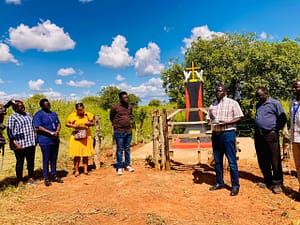

“The Gun May Be Silent, But the Work Is Not Done”
 hashtag
Gulu leaders and Rwandan partners open a South-to-South exchange on healing, resilience and the future of a region shaped by war
GULU CITY. More than two decades after the guns went quiet in northern Uganda, the question of what it takes to truly rebuild a people was at the centre of the room on day one of a knowledge-sharing workshop.
The workshop is part of a South-to-South exchange between Uganda, represented by Hashtag Gulu and YOLRED, and Rwanda, represented by Association Modeste et Innocente. It brought together leaders from Gulu City and District, local area leaders, project stakeholders and partners to share lessons on recovery, reconciliation and community growth.
“A story laced with pain”
Opening the session, Gulu City Mayor His Worship Labeja Julius Acire said the lived experience of the people of this region must guide how it plans for its future. The sub-region’s story, he said, is laced with pain and suffering.
He cautioned that recovery will not be quick. By his estimate, more than two decades of war could take over four decades to heal, because rehabilitating a society emerging from conflict is not the work of one person or one organisation. Although the people of the region have moved forward, he said, they are still playing catch-up.
The Mayor credited religious, political and cultural leaders with restoring peace through collective effort. But while the gun may be silent and infrastructure is beginning to rise, he reminded the room that “the city is its people,” and that the development of people must go hand in hand with the growth of the city.
The armed conflict has ended, the Mayor said, but new frontiers of conflict have taken its place: poverty, hunger and, above all, climate change, which he described as the biggest war the region now faces.
He urged participants to chart a way forward on rehabilitation and reintegration without losing sight of this new challenge, and to document the region’s progress and its contribution to community and culture so that Acholi is not defined by its past. “The message from here has to be positive and forward-looking,” he said, “because the people cannot stay stagnant.”
“Conflict is not ordinary”
In his keynote address, Mr Ambrose Olaa of the Acholi Heritage Foundation reflected on the nature of conflict itself. Conflict, he said, touches every part of human life and is ultimately inevitable. The danger comes when it is left unmanaged and spills into violence, harming individuals and communities and interrupting their growth and development.
“We cannot allow conflict to turn into violence again,” he said, “because it destroys the very essence of society.”
Mr Olaa noted that humanity has never ceased to exist because of conflict. People may not remain the same, he said, but they endure, which is why communities must look back and reflect.
He also offered a sobering view of the region’s history. For him, the true violence of the northern Uganda conflict was not only the war itself but the displacement of people into IDP camps, which left many disoriented and cut off from how they once lived and worked.
He went on to outline the elements of conflict and what, in his view, it takes to help people not only recover but also build the resilience to live, thrive and withstand whatever comes next.